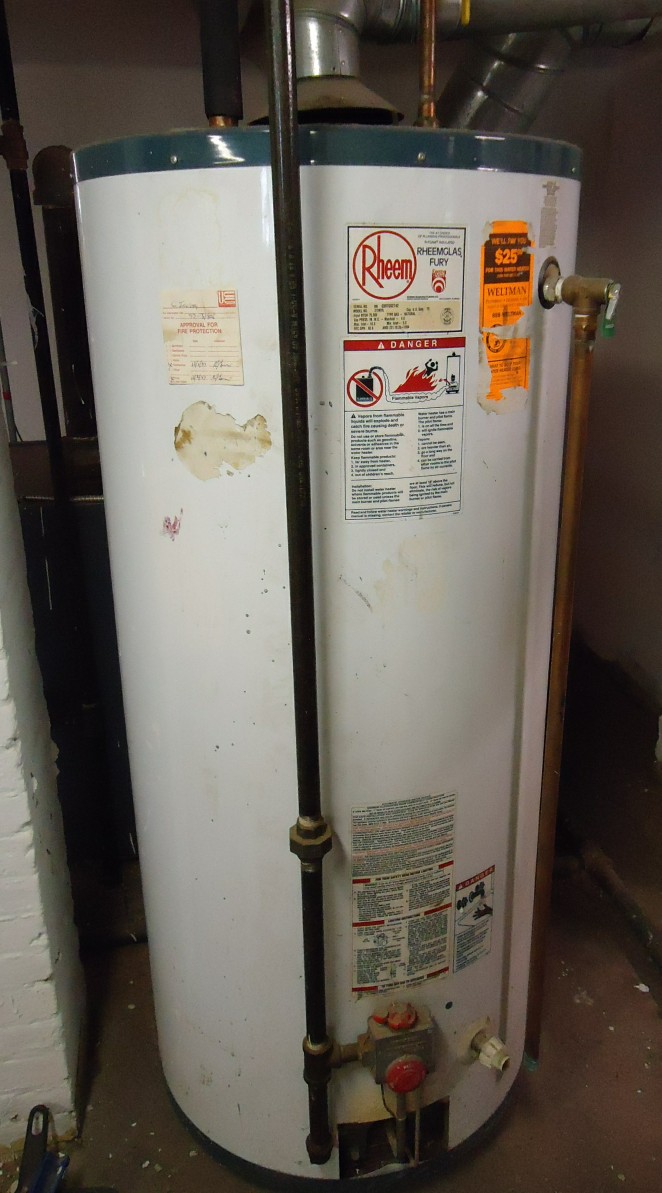
What happened to one 21-year-old water heater?
A homeowner named Ethan filled a bathtub for his daughter and got cold water instead of hot — the first sign, Family Handyman reported on September 29, 2026, that his water heater's tank had rusted through and was dumping water into the utility closet. The tank was 21 years old, well past the 10- to 15-year lifespan the plumbers quoted in the piece, and corrosion had eaten a hole straight through the steel.
Ethan closed the cold-water supply valve at the top of the tank, the standard first move, and the water kept coming anyway. Louisiana plumber Travis Hargrave told Family Handyman that a stuck valve is "pretty common on water heaters older than ten years," worn out by rotted gaskets or mineral buildup after years of never being touched. Ethan ended up shutting off the main water supply to the whole house before the leak would stop.
Why does a dying water heater flood instead of just stopping?
A tank doesn't rust evenly. Corrosion works from the inside out and eats through one weak spot in the steel, so there's no dent or bulge to see from outside before it finally lets go. The shutoff valve meant to stop that flow is usually the same age as the tank, and a valve that hasn't been turned in a decade can fail to seal shut right when it's needed most — which is exactly what happened in that Minnesota basement.
Once the water's loose, it behaves like any other flood, not a slow appliance leak. The EPA's guidance on mold says wet building materials need to be dried out within 24 to 48 hours to keep mold from taking hold, and a tank sitting on a finished basement floor, or next to drywall and baseboards, starts that clock the moment it fails — whether anyone's home to notice or not.
What to do first, and who actually fixes the tank?
Close the cold-water valve on the pipe feeding the top of the tank; if water keeps flowing the way it did for Ethan, go to the house's main shutoff instead. Switch off the breaker for an electric water heater, or turn the gas control knob to off for a gas one, and move anything sitting on the floor nearby before it soaks any longer than it has to. A cheap battery-powered water alarm on the floor next to the tank won't stop one from rusting through, but it will catch the leak hours before a tub full of cold water does.
Swapping out a corroded tank is licensed-plumber work, and under Utah's handyman exemption that's not a job 24/7 Express Handyman Service takes on. What the crews do handle is everything the flood leaves behind: pulling out standing water, cutting out soaked baseboard and water-damaged drywall before that EPA clock runs out, and drying the cavity so a few-hundred-dollar tank swap doesn't turn into a moldy wall six weeks later. A failing water heater rarely gives warning, and the valve next to it might not save you either, so the faster someone's cutting out wet drywall instead of waiting for it to dry on its own, the smaller the repair stays.